Our Lady of Guadalupe
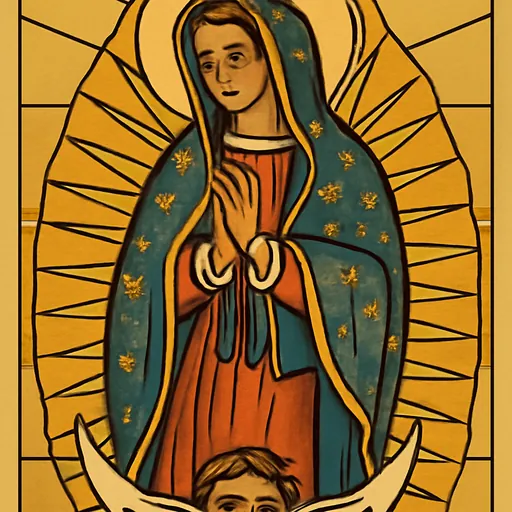
Our Lady of Guadalupe is the title given to the Virgin Mary as she is believed to have appeared to St. Juan Diego, an Indigenous Mexican convert, on Tepeyac Hill near Mexico City in December 1531. Her image on Juan Diego's cloak, the tilma, hangs in the Basilica of Guadalupe. Her feast day is December 12, and she is the patroness of the Americas.
The story of Guadalupe
In December 1531, ten years after the Spanish conquest of the Aztec capital, a widowed Indigenous convert named Juan Diego Cuauhtlatoatzin was walking to Mass across Tepeyac Hill, north of Mexico City. The fullest early account is the Nican Mopohua, written in Nahuatl, the Aztec language, and published in 1649. It tells the story this way.
The first apparition, December 9
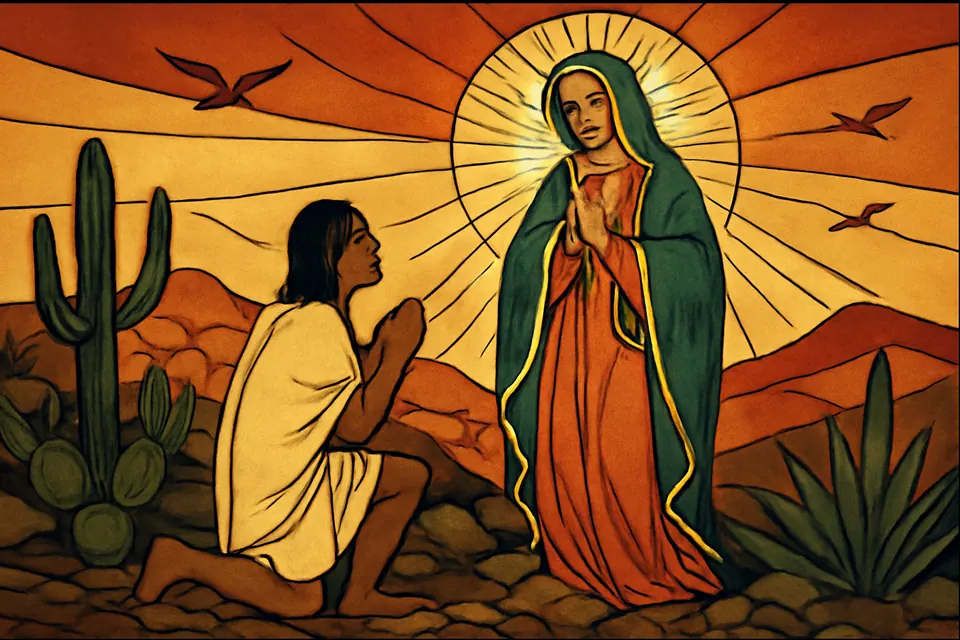
Juan Diego heard birdsong and music on the hilltop and saw a young woman dressed like an Aztec princess, shining like the sun. She spoke to him in Nahuatl, called herself the ever-virgin Mary, Mother of the true God, and asked him to tell the bishop to build a church on that spot.
The bishop's doubts
Juan Diego went to Bishop Juan de Zumárraga, a Franciscan, who listened but was unconvinced. Juan Diego returned to the hill and begged the Lady to send someone more important. She told him that he was the one she had chosen. On a second visit, the bishop asked for a sign.
The sick uncle and the roses, December 12
Juan Diego's uncle, Juan Bernardino, fell gravely ill, and on December 12 Juan Diego took a different path around the hill to fetch a priest. The Lady met him anyway. In the line from the Nican Mopohua that is most often quoted, she asked him:
Am I not here, I who am your mother?
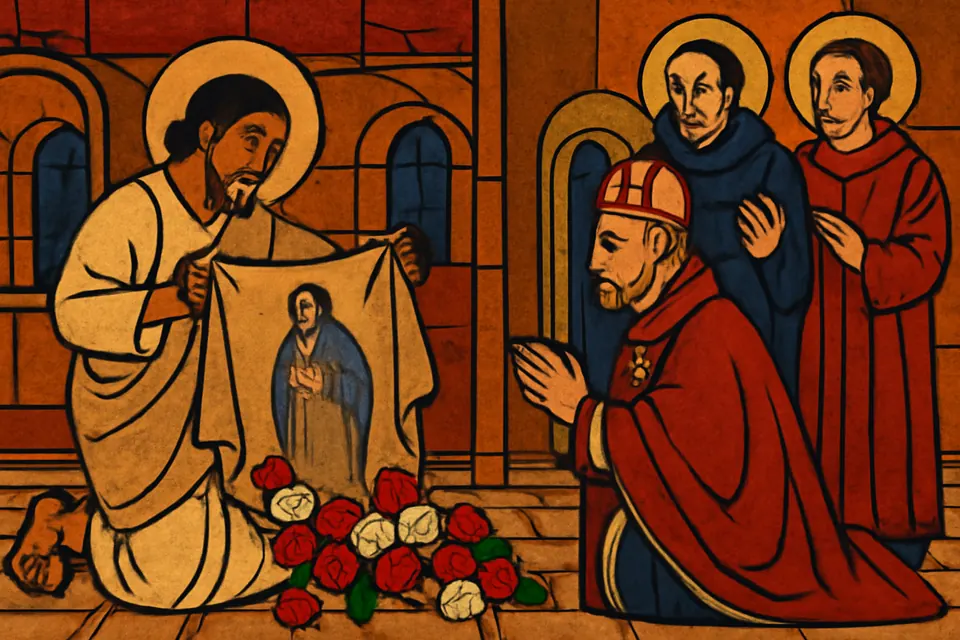
She assured him his uncle would recover and sent him to the hilltop, where he found Castilian roses blooming in the frost. She arranged them in his tilma, the cloak of woven cactus fiber that he wore.
The image on the tilma
When Juan Diego opened his tilma before the bishop, the roses spilled to the floor, and on the cloth was the image of the Virgin as he had seen her. The bishop knelt. That same day Juan Bernardino recovered and said the Lady had appeared to him too and told him her name: Santa María de Guadalupe.
The miracles of Guadalupe
- The image itself (traditional): Catholics regard the image on the tilma as miraculous. Ayate cloth, woven from agave fiber, is generally said to wear out within a few decades, yet the tilma has survived nearly five centuries.
- The healing of Juan Bernardino (traditional): reported in the Nican Mopohua as the sign that accompanied the image.
- The 1921 bombing (reported): On November 14, 1921, during the anti-Catholic persecution in Mexico, a man hid a bomb in flowers placed beneath the image. The blast damaged the altar and bent a brass crucifix, which is still displayed in the basilica, but the tilma and the people nearby were unharmed.
- Conversions: Within a decade of 1531, millions of Indigenous Mexicans had been baptized, and many historians link that growth to devotion to Guadalupe.
Scientists and historians have studied the image for centuries. Some studies report features they can't explain, and others argue that parts of it, such as the gold rays and the moon, were added or touched up by later artists. The Church doesn't require Catholics to believe in any particular apparition. It approved the devotion and, in 1754, Pope Benedict XIV approved the feast and its Mass.
What the image means
To the Aztec people of 1531, the image read like a message in their own visual language:
- Rays of the sun behind her: she is greater than the sun god they worshiped, yet she hides the sun rather than being it.
- The moon under her feet: she stands above the moon deity.
- The star-covered mantle: the stars of the heavens, and in Aztec art, the color of royalty.
- Folded hands and lowered eyes: she is not a god but prays to one.
- The black sash: worn by expectant mothers, showing that she carries a child.
Many Christians also see the image as the "woman clothed with the sun, with the moon under her feet" of Revelation 12:1.
The Basilica of Guadalupe
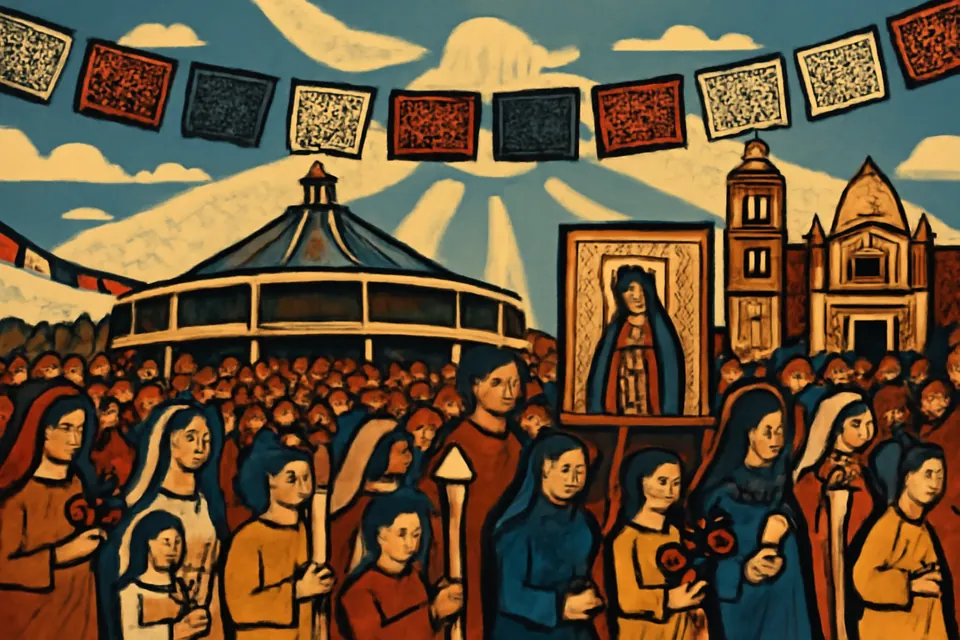
Bishop Zumárraga built the first small chapel at Tepeyac within weeks. Larger churches followed, and the tilma now hangs in the modern Basilica of Our Lady of Guadalupe, opened in 1976 beside the old basilica. Millions of pilgrims visit each year, and the largest crowds arrive in the days around December 12, many walking the last stretch on their knees.
Patroness of the Americas
- 1754: Pope Benedict XIV named her patroness of New Spain and approved her feast.
- 1910: Pope Pius X named her patroness of Latin America.
- 1945: Pope Pius XII called her Queen of Mexico and Empress of the Americas.
- 1999: Pope John Paul II made December 12 a feast for the whole of the Americas.
How Our Lady of Guadalupe is honored
- Feast day: December 12, preceded in many Mexican and Mexican-American parishes by a novena beginning December 3.
- Las Mañanitas: a dawn serenade sung to the Virgin on the morning of December 12.
- Juan Diego's feast: December 9.
Praying to Our Lady of Guadalupe
Catholics honor Mary as the mother of Jesus and ask for her intercession; they don't worship her. Many pray the Rosary or a nine-day novena before the feast, and many simply repeat her words to Juan Diego, "Am I not here, I who am your mother?", as a prayer of trust in hard times.
Frequently asked questions
What happened at Guadalupe in 1531?
According to the Nahuatl account Nican Mopohua, the Virgin Mary appeared four times to Juan Diego on Tepeyac Hill between December 9 and 12, 1531, and asked for a church to be built there. When the bishop asked for a sign, she sent Juan Diego to gather roses on the frozen hilltop. When he opened his cloak before the bishop, the roses fell out and her image was found on the cloth.
Why is Our Lady of Guadalupe's feast on December 12?
December 12, 1531 is the day the image is said to have appeared on Juan Diego's tilma in front of Bishop Juan de Zumárraga. Juan Diego's own feast is December 9, the date of the first apparition.
What do the symbols on the image mean?
Standing in front of the sun and over the moon showed the Aztec viewers that she was greater than their sun and moon deities, while her folded hands show she is not God but prays to him. The black sash at her waist was worn by expectant mothers, which is why she is honored as a patroness of the unborn.
Is the tilma image still in existence?
Yes. The original cloak hangs above the altar of the Basilica of Our Lady of Guadalupe in Mexico City, one of the most visited Catholic shrines in the world.
Is Our Lady of Guadalupe a saint?
She is the Virgin Mary under a particular title. Catholics honor Mary above all the saints. The man who saw her, Juan Diego, was canonized a saint by Pope John Paul II in 2002.
Sources
- Nican Mopohua (Nahuatl account attributed to Antonio Valeriano, published 1649 by Luis Laso de la Vega)
- Basilica of Our Lady of Guadalupe (official site)
- Catholic Encyclopedia (1910): Shrine of Our Lady of Guadalupe
- Vatican: Canonization of St. Juan Diego Cuauhtlatoatzin, July 31, 2002